What Is the Difference Between Ice Cream, Gelato, and Frozen Custard?
Ice cream, gelato, frozen custard: at the counter, they all look about the same, cold, creamy, and impossible to turn down. In all honesty, most people couldn't tell you what separates one from the next, nor does it matter to them.
What most people do know is that they all start with milk and sugar, come out frozen, and hit the spot on a warm Lancaster County afternoon. But there are real differences between the three, and they're bigger than you'd guess. Once you know them, you'll read a frozen dessert menu a little differently.
We've been making fresh ice cream from our own Jersey cows at Lapp Valley Farm since 1975. We know what goes into a great frozen treat, and we're happy to churn it all out for you.
Keep reading to find out what actually separates these three popular desserts: from the ingredients to the texture to the way they're served.
TL;DR - What Is the Difference Between Ice Cream, Gelato, and Frozen Custard?
- Ice cream must contain at least 10% milkfat and is churned with more air, giving it a lighter, fluffier texture.
- Gelato uses more milk than cream, has less air churned in, and is served warmer, making it denser and more intensely flavored.
- Frozen custard is like ice cream, but with at least 1.4% egg yolk, giving it a richer, velvety texture and very little air.
- The biggest differences come down to fat content, egg yolks, the amount of air incorporated, and serving temperature.
- Milk quality matters: higher fat and protein content means a creamier, fuller-bodied ice cream, which is why we use fresh Jersey cow milk at Lapp Valley Farm.
What Is Ice Cream, Exactly?
Ice cream is the one most people know best. But there's more to it than just milk and sugar in a freezer.
The FDA requires that ice cream contain at least 10% milkfat, which is the minimum required to legally be called ice cream. Higher-quality ice cream often has more. The amount of air that's whipped into ice cream during the freezing process is called "overrun." More air means a lighter, fluffier texture, and generally, less air means a denser, creamier scoop.
Here's a quick look at what defines ice cream:
- Milkfat: At least ten percent by law
- Main ingredients: Cream, milk, sugar, and flavorings
- Air: Churned in at a faster speed, creating a lighter texture
- Egg yolks: Less than 1.4 percent, or none at all
- Serving temperature: Colder than gelato, typically around six to ten degrees Fahrenheit
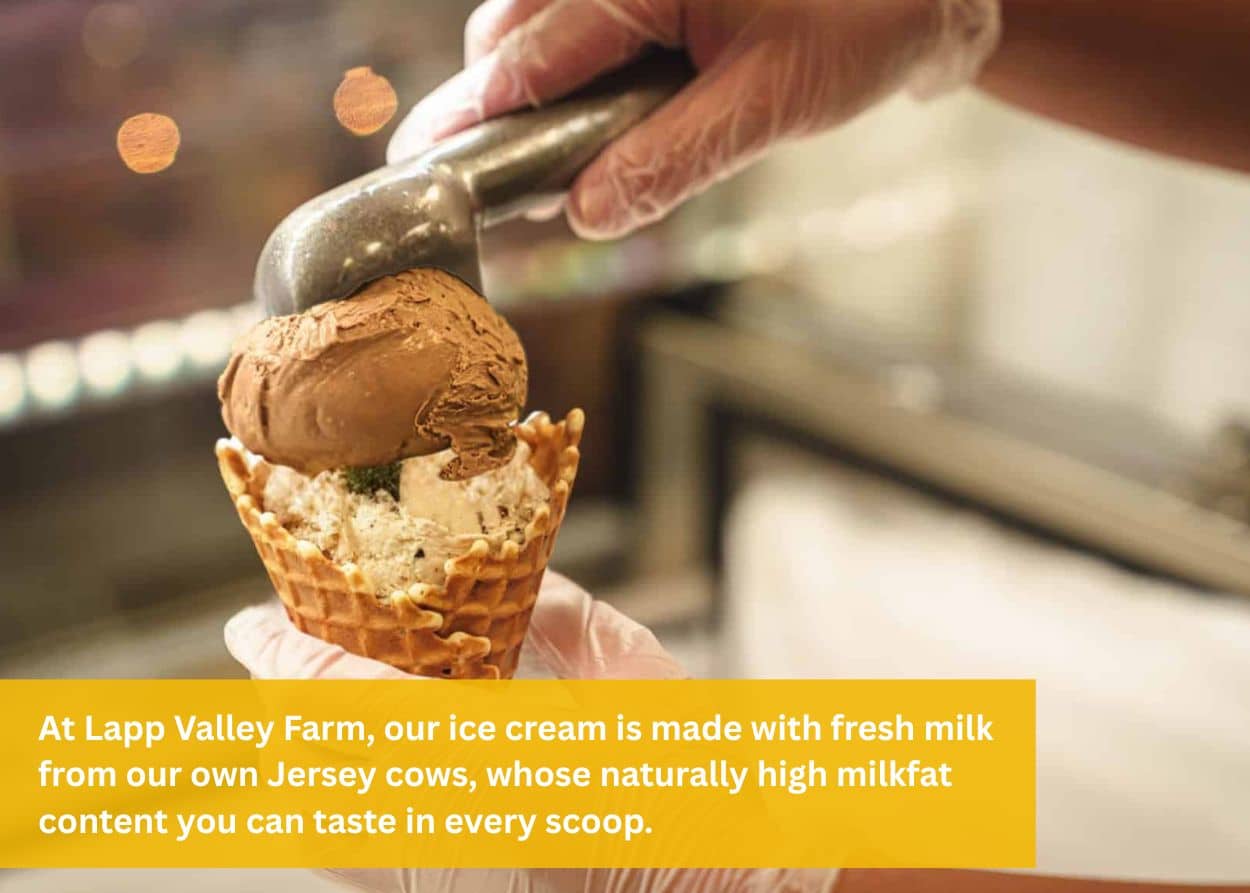
At Lapp Valley Farm, we make our ice cream using fresh milk from our own Jersey cows. Of all common dairy breeds, Jersey cows boast the highest milkfat content, and that high fat content makes their milk especially well-suited for ice cream. You can taste it in every scoop.
What Makes Gelato Different?
Gelato looks like ice cream. It's in a similar class. You scoop it the same way, but it's a different dessert, and the differences start with the ingredients.
Gelato uses more milk than cream and has a lower fat content, typically four to eight percent. It's also churned slowly, with ten to twenty-five percent air, which creates a denser, creamier feel than ice cream.
Here's how gelato stands apart:
- Milkfat: Lower than ice cream, usually four to nine percent
- Main ingredients: More milk, less cream, little to no egg yolks, making it generally the best choice for people with egg allergies
- Air: Less of it, gelato is much denser than ice cream
- Serving temperature: Warmer than ice cream, around ten to twenty degrees Fahrenheit
- Texture: Smooth, dense, silky, and sticks to the spoon
Gelato is even served at a slightly warmer temperature than ice cream, which not only affects the texture, making it softer and more pliable, but also enhances the flavor, so you get a richer taste.
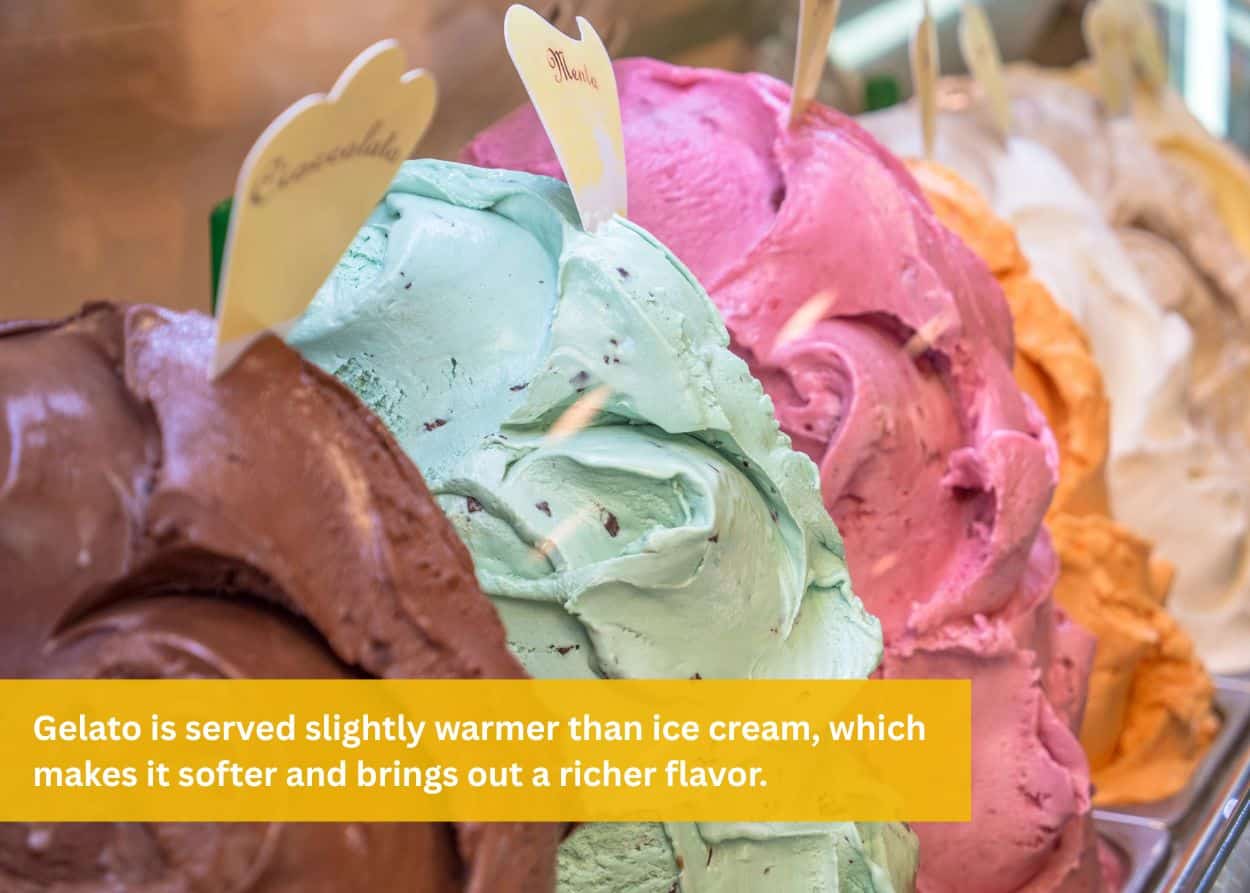
That warmer temperature is actually a big reason gelato flavors can taste so intense. Because gelato doesn't numb the tongue's taste buds as much, the flavors hit more immediately.
Understanding what sets gelato apart makes it easier to appreciate how it differs from a great scoop of ice cream.
So What Is Frozen Custard?
Frozen custard is the most misunderstood of the three. Many people assume it's just another name for ice cream. It's not, and the difference comes down to one key ingredient: egg yolks.
The FDA defines frozen custard as a product that must contain no less than ten percent milkfat and a minimum of 1.4 percent egg yolk. That additional egg yolk is what gives frozen custard its particularly rich and creamy texture.
Here's what makes frozen custard stand out:
- Milkfat: Same minimum as ice cream; at least ten percent
- Main ingredients: Milk, cream, sugar, and a significant amount of egg yolks
- Air: Very little, has a similar low overrun as gelato
- Texture: Dense, velvety, and ultra-rich
- Serving style: Often made fresh and served the same day
Frozen custard has an overrun of fifteen to thirty percent, similar to gelato, and the high percentage of butterfat and egg yolk gives it a thick, creamy texture and a smoother consistency than ice cream.
Frozen custard has a loyal following, especially along the East Coast and in the Midwest, where you'll find dedicated custard stands serving it fresh daily.
The Key Differences, Side by Side
Still a little fuzzy? Here's a simple breakdown of how all three compare:
| Ice Cream | Gelato | Frozen Custard | |
|---|---|---|---|
| Milkfat | 10%+ | 4–9% | 10%+ |
| Egg Yolks | Less than 1.4% | Little to none | 1.4% or more |
| Air (Overrun) | Higher (lighter) | Lower (denser) | Very low (densest) |
| Serving Temp | Coldest | Warmest | Middle |
| Texture | Light, fluffy | Silky, dense | Rich, velvety |
The short version? Ice cream is light and airy. Gelato is dense and intensely flavored. Frozen custard is rich and velvety, thanks to those egg yolks.
We don't make gelato or frozen custard at Lapp Valley Farm, but we do make ice cream, and because of the quality of our milk, we think ours stands up to anything.
Why the Quality of Milk Makes All the Difference
Here's something that doesn't get talked about enough: no matter which frozen dessert you're eating, the quality of the dairy used to make it matters a lot.
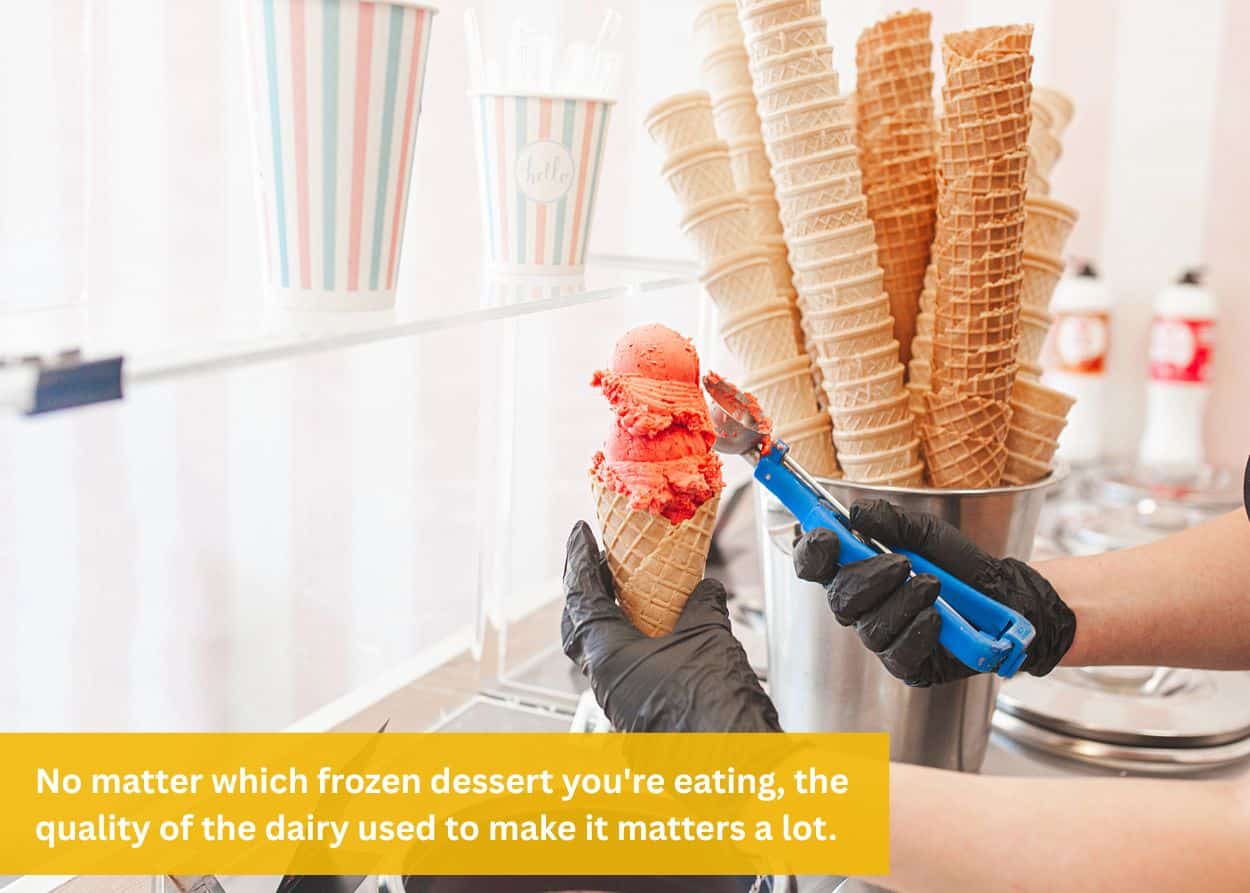
This is especially true for ice cream. The starting ingredients shape everything: the flavor, the texture, the richness. Use average milk, and you get average ice cream. Use something better, and the difference is immediate.
That's exactly why we use milk from our own Jersey cows. Jersey cow milk has around 4.5 - 5.5% fat content, compared to around 3.5% in standard whole milk. It also has around 18% more protein and 20% more calcium than regular milk.
More fat means a creamier base. More protein means a fuller body and a smoother, more satisfying texture. And because we control the whole process, from the cows, the feed, and the processing, we know exactly what's going into every batch of ice cream we make.
Now You Know — Come Taste the Difference
The next time you're standing at a frozen dessert counter, you'll know exactly what sets each option apart, and you'll be able to order with confidence. Fat content, egg yolks, how much air is churned in, and serving temperature: these details make all the difference in how a frozen dessert actually tastes and feels.
And knowing all that makes the next scoop even better.
Whether you live right here in Lancaster County or you're just passing through, a stop at Lapp Valley Farm is worth the time. We've been making fresh ice cream from our own Jersey cows since 1975, and when you know what goes into a great scoop, you can taste the difference. This isn't mass-produced ice cream made with average milk. It's made from scratch with milk we oversee each step of the way.
Come visit us in Gordonville and try one of our seventeen-plus flavors for yourself. Browse our menu online before you come, bring the family, and let the kids burn off some energy in our indoor play area while you enjoy a scoop or two. We're open Monday, Tuesday, Thursday, and Friday from seven a.m. to eight p.m., Wednesday until six, and Saturday until five.
If you are still hungry for ice cream knowledge, take a look at these articles:
The Ultimate Guide to Eating Ice Cream Without Guilt
Can Dogs Eat Ice Cream? What Every Dog Owner Should Know Before Sharing a Scoop